



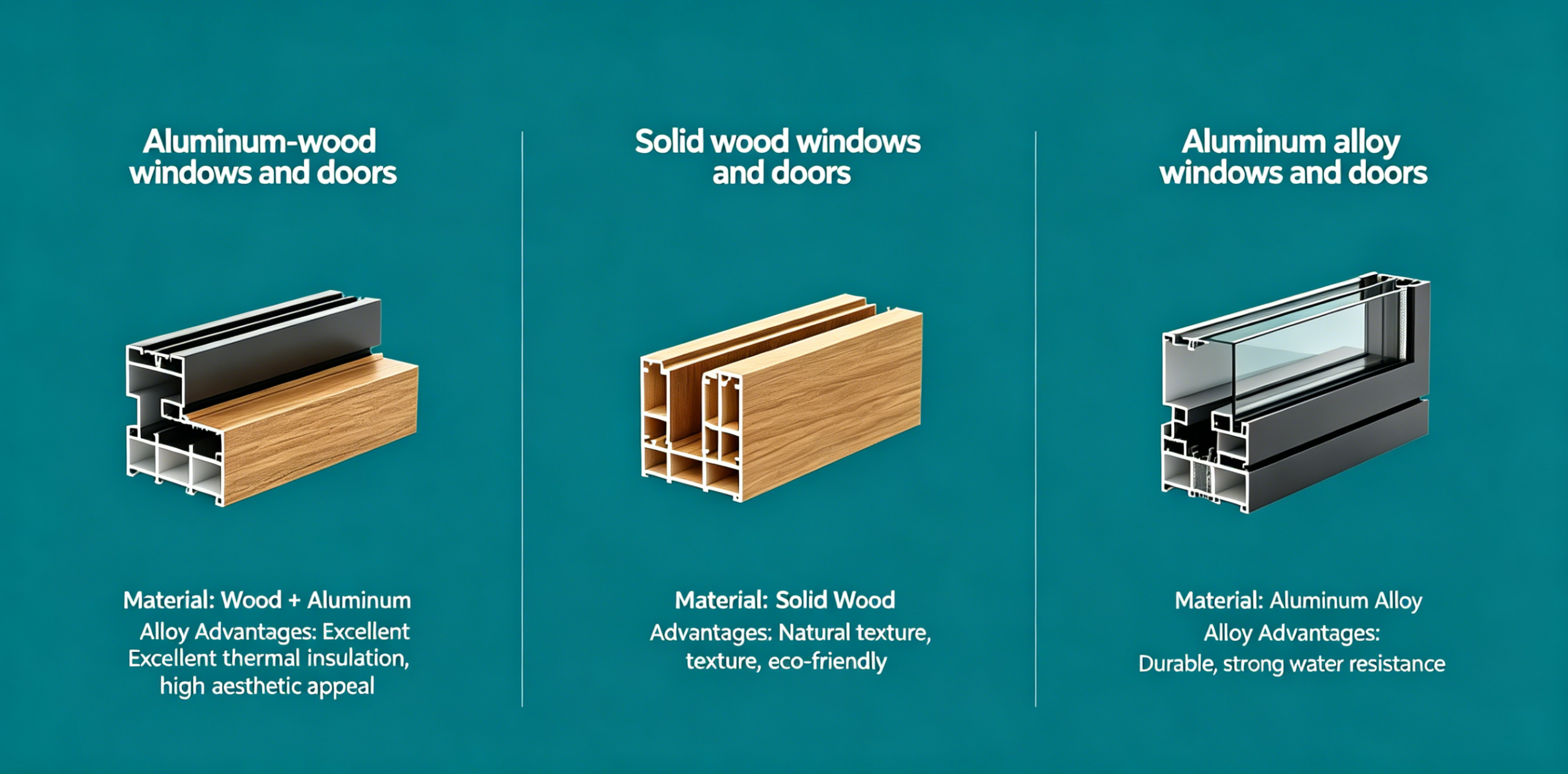
Aluminum-wood doors and windows vs. solid wood doors and windows vs. aluminum alloy doors and windows
In the European window and door market, aluminum-wood windows, solid wood windows, and aluminum alloy windows are the three most popular categories. However, many export clients and homeowners often struggle with the choice between aesthetics, performance, and cost-effectiveness when selecting windows and doors. Especially given the significant climate differences and stringent regulations across Europe, choosing the right windows and doors can not only reduce future maintenance costs but also ensure compliance with local building standards and successful inspections. Today, we’ll clarify the differences between these three types from three core dimensions: material characteristics, performance, and suitable application scenarios, helping you quickly choose the right windows and doors for the European market.
First, let’s clarify the core conclusions: For high-end villas, estates, passive houses, and historical building renovations, aluminum-wood windows and doors are the preferred choice; for clients seeking a natural feel, with ample budgets, and a focus on environmental protection, solid wood windows and doors are an option; for those with limited budgets, prioritizing durability and low maintenance, and for commercial buildings or ordinary residences, aluminum alloy windows and doors are a good choice. There is no absolute superiority or inferiority among the three; the key is to choose what suits the needs and scenarios of the European market.
Aluminum-wood windows and doors: Combining interior wood and exterior aluminum, they offer a perfect balance of strength and flexibility, making them a top choice in the high-end European market. They integrate the warm aesthetics of solid wood with the weather-resistant durability of aluminum alloy. The interior uses high-grade solid wood such as oak and beech, retaining natural grain and insulation properties, aligning with Europeans’ pursuit of a natural home. The exterior uses thermally broken aluminum alloy profiles, treated with fluorocarbon coating, making them resistant to UV rays and corrosion, unaffected by the harsh climates of Northern Europe, Southern Europe, and Western Europe, completely solving the problems of pure wood windows being prone to warping and not weather-resistant. Furthermore, the thermally broken structure of aluminum-wood windows and doors allows for a U-value as low as 1.0 W/(m²·K), meeting EU near-zero energy building requirements, and providing sound insulation of over 45dB. Suitable for high-end villas and estates, they are also a popular choice for renovations of older homes in Europe.
Solid wood doors and windows: Natural and environmentally friendly, with outstanding texture, suitable for customers who pursue high-end aesthetics. Made from natural logs, they are formaldehyde-free and free of harmful volatile organic compounds, aligning with European low-carbon and environmentally friendly concepts. The natural porous structure of wood provides excellent thermal and sound insulation, creating a warm and tranquil atmosphere for the home. However, solid wood doors and windows also have obvious drawbacks: the exterior wood is susceptible to climate effects, leading to cracking, warping, and insect infestation, requiring regular maintenance and incurring higher costs. They are more suitable for temperate regions in central Europe (such as central France and southern Germany), and are best suited for interior doors and windows or high-end residences and guesthouses requiring professional maintenance.
Aluminum alloy doors and windows: durable, low-maintenance, and cost-effective, suitable for the mass market and commercial settings. Made with thermally broken aluminum alloy profiles, they are high-strength, wind-resistant, and corrosion-resistant, with a lifespan of 30-40 years. Daily maintenance is minimal, requiring only simple cleaning. While the energy efficiency of aluminum alloy doors and windows is not as high as that of aluminum-wood or solid wood, by using Low-E double-glazed windows, they can still meet basic EU energy efficiency standards. They are also relatively affordable, making them suitable for ordinary residential buildings, apartments, and commercial buildings in Europe, especially in coastal areas (such as the Mediterranean coast), where they effectively resist salt spray corrosion.
Finally, here are some selection tips: In the frigid regions of Northern and Eastern Europe, prioritize aluminum-wood windows and doors (superior insulation); in the sunny regions of Southern Europe, both aluminum-wood and aluminum alloy windows and doors are acceptable (pay attention to sun-resistant coatings); in the rainy and humid regions of Western Europe, avoid solid wood windows and doors, and prioritize aluminum-wood or aluminum alloy windows and doors; for high-end projects that prioritize both aesthetics and performance, aluminum-wood windows and doors are a must; for projects with limited budgets and a focus on practicality, choose aluminum alloy windows and doors.
If you require customized door and window selection solutions based on the specific climate and regulations of European regions (such as Germany, the UK, and Italy), please contact us for highly adaptable products that meet CE and EN certifications and professional advice.